
An Op-Ed Written By: Ranon Soans
Stopgap Coffee is tucked into a converted heritage home in Wîhkwêntôwin, the kind of place you only find if someone tells you about it or you happen to walk past. On any given morning it feels like the neighbourhood's living room. You recognize faces. You strike up a conversation in line, or with the person pulling the espresso shot. You leave having talked to someone you weren't expecting to.
Most cities used to have "third places" like this on every other block. The corner pub, the neighbourhood bookstore, the café where people stay longer than they planned. Places woven into the daily texture of a neighbourhood, the kind you wander into rather than plan a trip for.
Edmonton had more of them once. Main streets lined with independent shops, accessible on foot and by streetcar, where running an errand and running into a neighbour were often the same trip. Through the latter half of the twentieth century that changed. Cities across North America were rebuilt around the car — the promise being convenience, the ability to get anywhere quickly and easily. And in many ways it delivered. But neighbourhood storefronts emptied out in the process. The corner café, the local grocer, the pub within walking distance — these became harder to sustain when the people who might have walked to them were instead driving somewhere farther away. The rhythms of daily neighbourhood life grew harder to come by. Not because people stopped wanting them, but because the city had been organized around a different set of priorities.
What is striking now is where they are coming back.
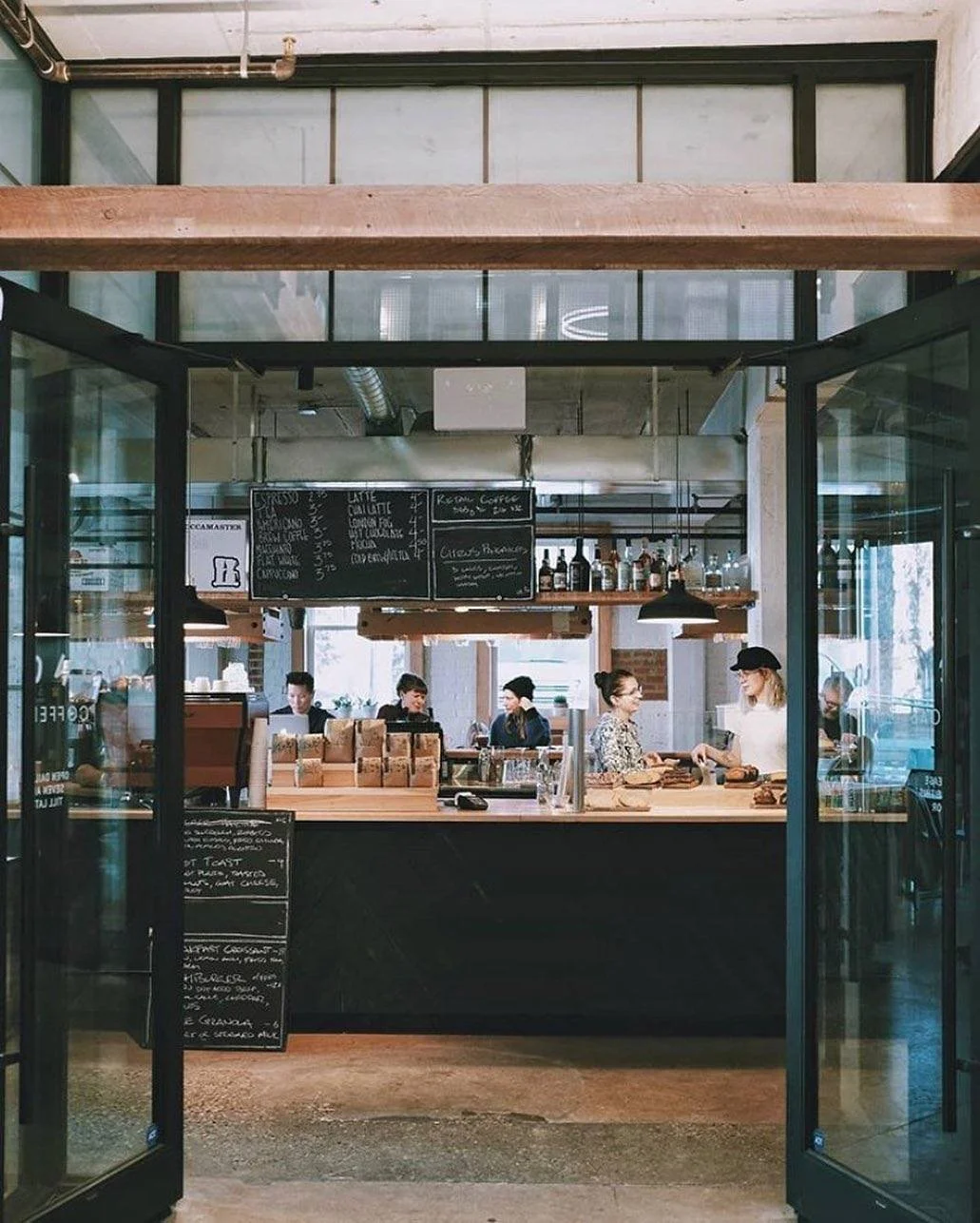
Pictured: Iconoclast Coffee, located at 12021 102 Ave NW, within the Oliver Exchange Building.
In Edmonton's densest neighbourhood, Iconoclast Coffee anchors Oliver Exchange, another converted heritage building only a few blocks from Stopgap. On 124 Street, Delavoye has built a bean-to-bar chocolate factory and street-facing café that has become a fixture of the corridor — the kind of place people find on a walk and return to deliberately.
In Strathcona, an older building on 99 Street has been reimagined as Mill Creek West — Frank's Pub and Porchlight Books at street level, with Made by Marcus in a neighbouring converted house next door.
In McQueen, Freson Brothers opened their most central Edmonton location in a reinvested commercial strip at the edge of some of the city's most active infill neighbourhoods. In Bonnie Doon, Duggan's Boundary Irish Pub has been a neighbourhood fixture for years. It seems busier now than it has ever been, as the surrounding blocks have filled in and a new generation of residents has arrived within walking distance.
None of these places exist in isolation. Each has grown from the neighbourhood around it — people who walk past, stop in, come back, and tell someone else. The money spent at Delavoye or Porchlight Books tends to stay closer to home — in the hands of people who live here, hire here, and are invested in what happens here. The person behind the counter knows the neighbourhood because they are probably a part of it.
There is something that happens to a city when enough of this accumulates. It is difficult to describe precisely but easy to recognize — a sense that the street belongs to the people on it, that you care about your city's future, and that something worth sticking around for, is happening. The neighbourhoods in Edmonton where that feeling is strongest are not accidents. They are the product of sustained investment in the kinds of places and the kinds of density that make daily life enjoyable.
This is why infill is not only a housing argument. The businesses follow the people, the people follow the places, and somewhere in that cycle a neighbourhood stops being somewhere you live and becomes somewhere you belong.